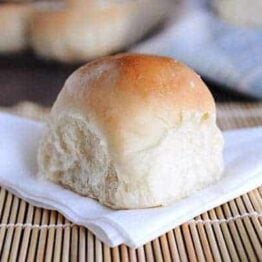
French Bread Rolls
Ingredients
- 1 ½ cups warm water (105 to 110 degrees F)
- 1 tablespoon instant or active dry yeast (see note)
- 2 tablespoons granulated sugar or honey
- 2 tablespoons canola oil, vegetable oil, or olive oil
- 1 teaspoon table salt
- 3 ½ to 4 cups (497 to 569 g) all-purpose or bread flour, more or less (see note)
Instructions
- In the bowl of a stand mixer fitted with the dough hook or in a large bowl by hand, combine the warm water, instant yeast, sugar, oil, salt and 2 cups of the flour.
- Begin mixing, and continue to add remaining flour gradually until the dough has pulled away from the sides of the bowl.
- Knead the dough for 4 to 5 minutes in a stand mixer (7 to 9 minutes by hand). Add additionally flour a tablespoon or two at a time only if the dough starts to cling to the sides of the bowl and is really sticky to the touch (see note below for clarification).
- Place the dough in a lightly greased bowl and cover. Let the dough rise until doubled, 1 to 2 hours.
- Turn the dough out onto a lightly greased countertop.
- Divide the dough into 12 equal pieces (about 2.75 ounces each, more or less), and form the dough into round balls by cupping your hand around the dough and spinning into a round shape, pinching the bottom to seal any rough edges, if needed (video tutorial here right at minute marker 2:20).
- Place the rolls in a lightly greased 9X13-inch pan or on a lightly greased half sheet pan. Space the rolls about 1/2 to 1-inch apart.
- Cover the rolls loosely with a lightweight towel or greased plastic wrap and let the rolls rise until very puffy and nearly doubled, about 45 minutes to 1 hour.
- While the rolls rise, preheat the oven to 400 degrees F (if your oven bakes hot, preheat to 375 degrees F.) Bake for 17 to 20 minutes until golden and baked through.
- Immediately out of the oven, brush with butter, if desired. Serve warm or at room temperature.
Notes
Yeast: When I originally posted this recipe over ten years ago, it was necessary to dissolve active dry yeast in water before using. That isn't the case anymore (as active dry yeast has been reformulated into smaller particle sizes). I've edited the recipe to reflect this. I use 1 tablespoon of yeast since I buy it in larger bulk packages, but if you are using packets of yeast (the packets include 2 1/4 teaspoons), you can use one packet for this recipe. The dough might take a bit longer to rise if using the packet vs one full tablespoon.
Flour: The exact amount of flour will depend on your elevation, the way you measure flour, and other factors. Judge the amount of flour to add by how the dough looks and feels. It should be soft, smooth and slightly tacky to the touch while clearing the sides of the bowl. To test, after the dough has kneaded for a few minutes, turn the mixer off and grab a golf ball-size piece of dough. It might leave a little bit of sticky residue on your fingers, but if you can roll it into a small ball without it sticking all over to your hands, the dough does not need more flour. If it sticks quite a bit to your fingers, gradually add a bit more flour as needed.
Freezable Option: The baked rolls freeze great. Place the baked and cooled rolls in a ziploc freezer bag, seal the bag, and place in the freezer for up to a month or so.