

French Bread Rolls {Step-by-Step}
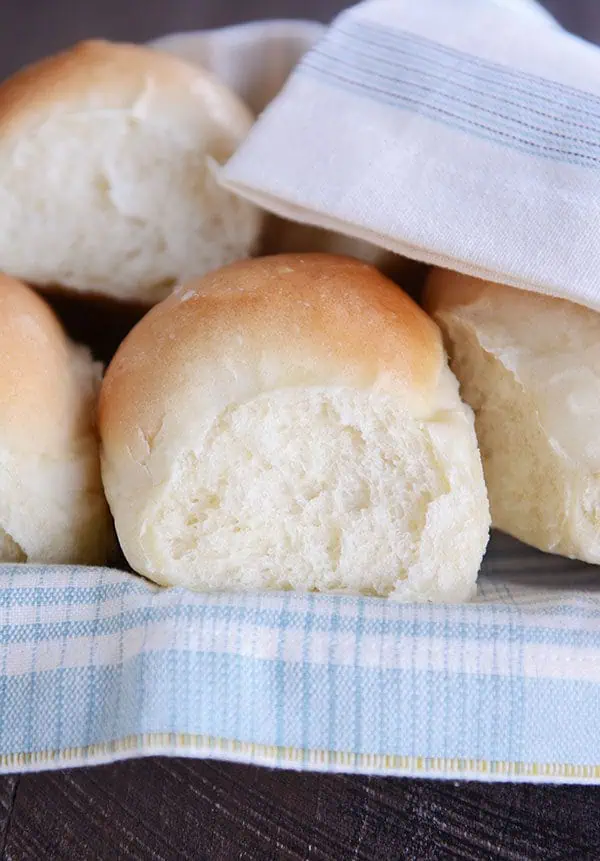
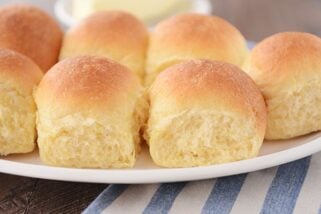
These French bread rolls make the best dinner rolls, hamburger buns, or sub buns. They are light, fluffy, and perfect for beginner (or expert) bakers. With over 1,000 5-star reviews, they are one of the most popular roll recipes on the internet.
⭐️⭐️⭐️⭐️⭐️ Thank you so much for the recipe. The rolls were wonderful. Made a double batch for Easter and froze some. They freeze excellently. Will be my go to rolls. -Jackie
Why So Many People Love This Recipe
The dough for these French bread rolls is straightforward and very forgiving. Here are many reasons why this is a foolproof, trusted recipe:
- A stand mixer fitted with the dough hook makes easy work of this recipe, however, the dough is so easy to make that it can also be mixed and kneaded by hand.
- The recipe doesn’t require scalding milk or any fussy steps. The ingredients are basic and dairy-free (other than brushing the tops of the baked rolls with butter).
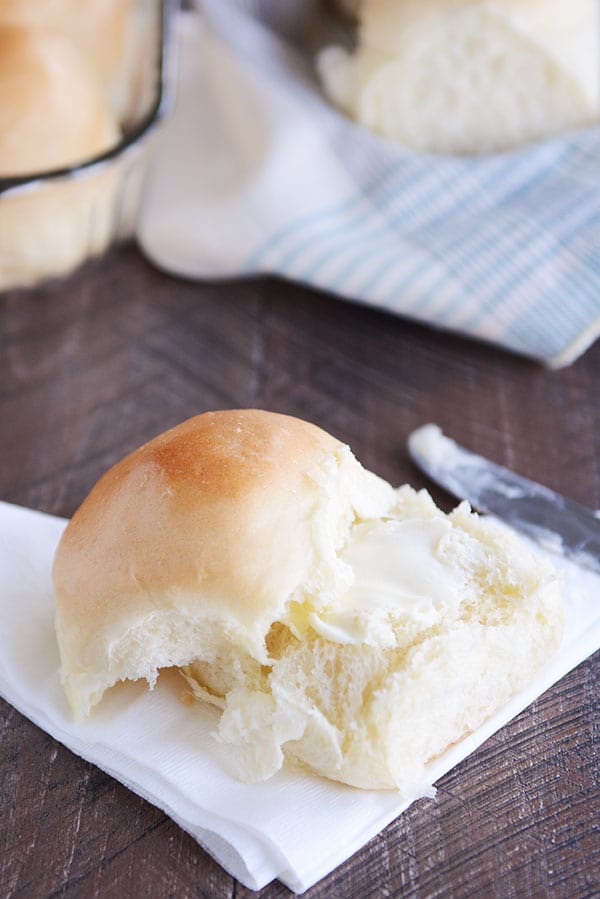
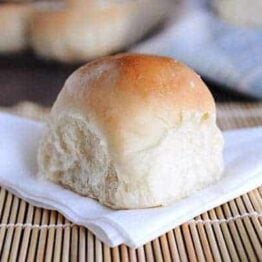
- The rolls are ultra-soft and fluffy.
- You can shape the dough into dinner rolls, sub buns, hamburger buns – and some reviewers even report using the dough for pizza crust.
- These French bread rolls are easy enough for simple dinners and delicious enough to serve at any holiday dinner.
Ingredients Notes
- Warm water: The temperature of the water should be between 105 and 110 degrees F.
- Yeast: Both instant yeast and active dry yeast work in this recipe.
- Sugar: The small amount of sugar in these rolls helps activate the yeast and assists in the rolls rising quickly. It isn’t enough sugar to make the rolls taste overly sweet. You can dial the sugar up or down depending on your taste preferences.
- Oil: A few tablespoons of oil gives the dough a supple, smooth texture and helps the rolls taste fresh even the day after baking.
- Salt: I use table salt for this recipe.
- Flour: All-purpose or bread flour can be used – or a combination of both. Bread flour will create a chewier, fluffier roll texture. You can sub in 50% whole wheat flour for part of the white flour; if doing so, I recommend using a white whole wheat variety, which helps the dough stay light and fluffy.
Tips for Making Yeast Dough at Home
Here is the biggest tip I can give for successfully making yeast dough at home:
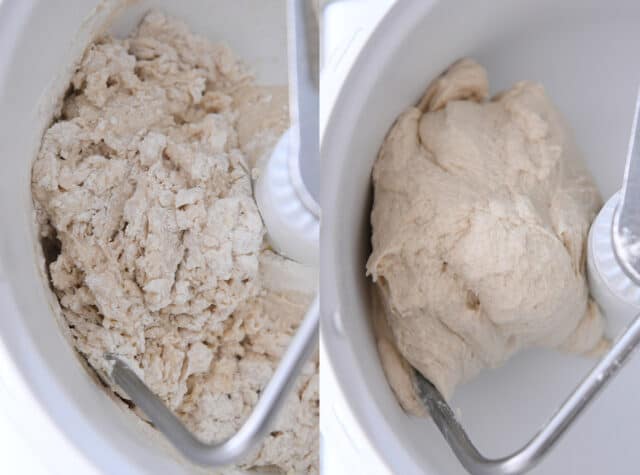
Stop stressing about adding the exact amount of flour called for in a recipe. Many, many factors determine how much flour is needed (elevation, humidity, how we each measure flour, etc.) Add the flour gradually and judge the dough by how it looks and feels. If you need to add a bit more flour, that’s ok!
How to test this French bread roll dough:
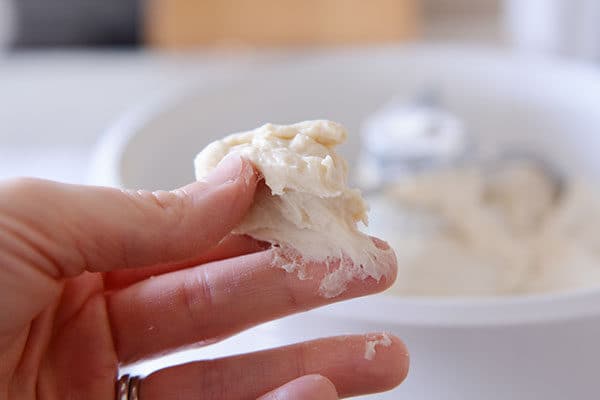
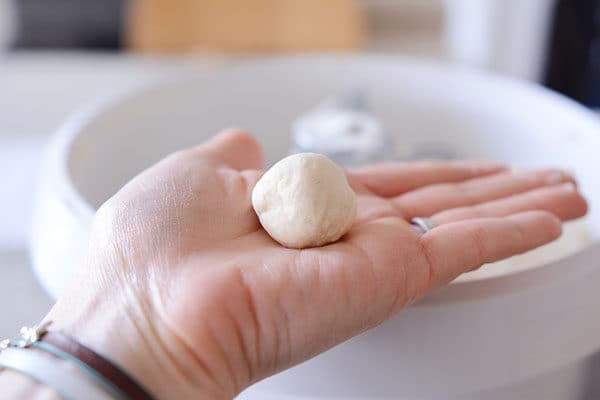
- After the flour has been added and has kneaded for a few minutes, grab a golf ball-size piece of dough.
- Initially, it might leave a little sticky residue on your fingers.
- Try rolling it into a ball without any oil or cooking spray on your hands.
- If it can form a ball shape without sticking to your hands in a shaggy, horror-movie mess, you are good to go. If not, add a bit more flour (a couple tablespoons), mix and try again.
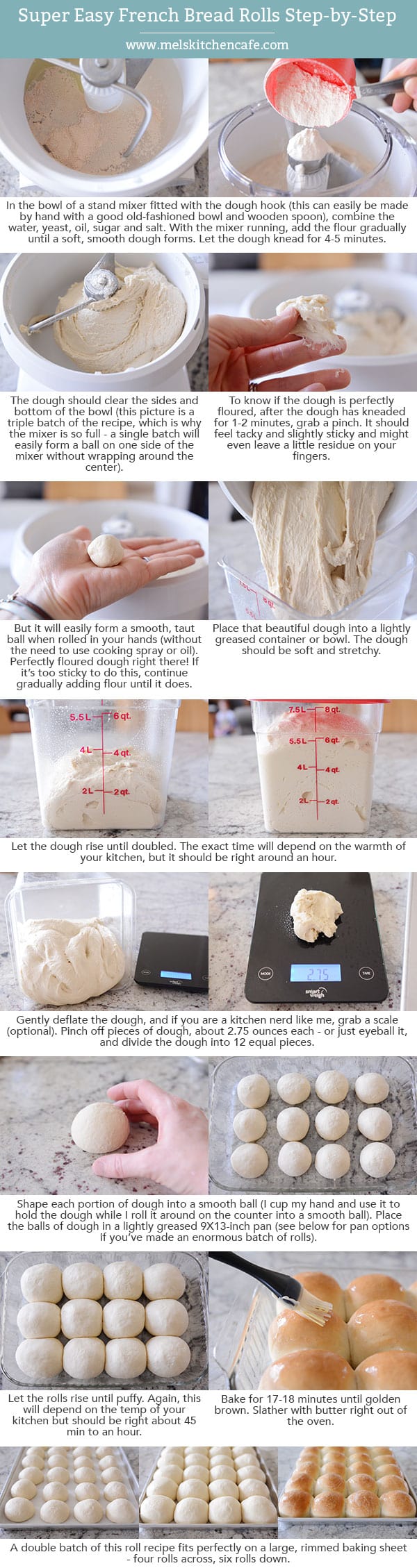
You can see from the pictures below that initially, the dough seems pretty sticky, however, it rolls just fine into a ball without a lot of sticky dough on the palm of my hand. Adding too much flour can lead to rolls that are dense and heavy, so take time to learn what a properly floured dough looks and feels like.
How to Shape French Bread Dinner Rolls
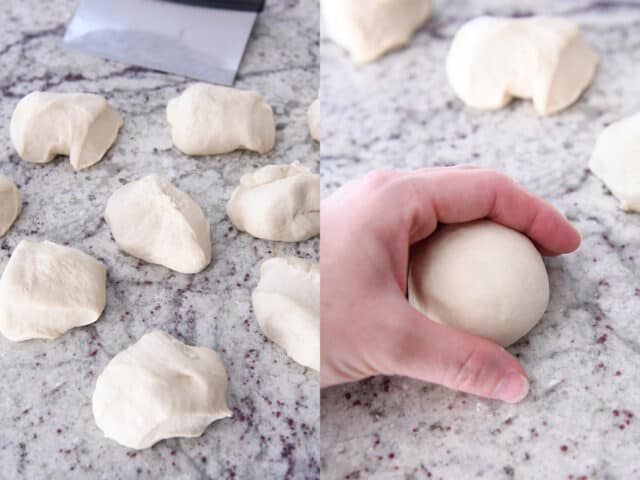
- Cut the dough into 12 equal pieces.
- I like to weigh each piece to make sure they are uniform. Each dough piece usually weighs right around 2.6 to 2.7 ounces.
- Cup your hand around the dough and roll the dough into a smooth ball, keeping the pinky side of your hand against the counter while you roll.
- Pinch the bottom to seal, if needed.
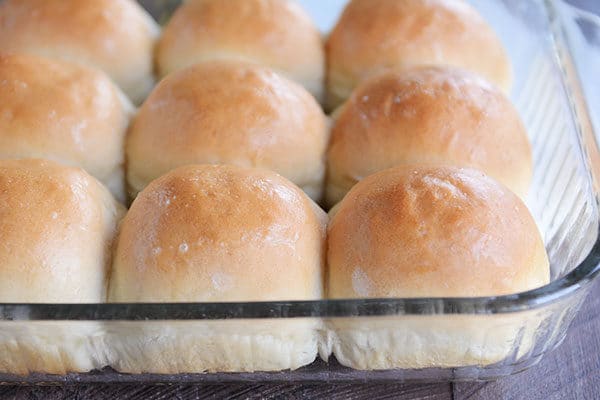
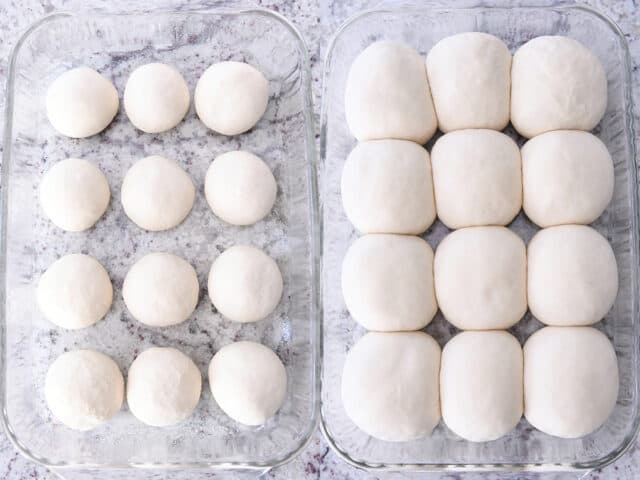
A single batch of roll dough (12 rolls) fits in a 9X13-inch pan. I almost always double this recipe and bake the rolls on a half sheet pan, which fits 24 rolls perfectly.
The Perfect Roll for Sandwiches or Subs
Over the years, these French bread rolls have become more than a dinner roll.
A quick scroll through the comments shows that many of you are using this roll dough for everything from sloppy joes to sub sandwiches.
Make-Ahead and Freezer Notes
Make-Ahead: The dough for these French bread rolls can be made and refrigerated overnight (either in bulk, or the rolls can be shaped, place on a pan, covered and refrigerated). Take the shaped rolls out of the fridge to rise fully before baking.
Freezing: The baked and cooled rolls freeze great. Place the rolls in a ziploc freezer bag, seal the bag, and place in the freezer for up to a month or so.
There is truly not an easier, more perfect roll recipe out there!
I often make these rolls for my holiday dinners – from Thanksgiving to Easter – because they are so easy, they work out every time, and they are always devoured. Plus, they make excellent leftovers!
Tools for Making French Bread Rolls at Home
*Affiliate links included below for products I’ve purchased from Amazon; feel free to shop around for the best price!*
- This is the kitchen scale I use to weigh each piece of dough.
- These containers are great for rising dough (the measurement marks make it easy to keep track of how much the dough has risen).
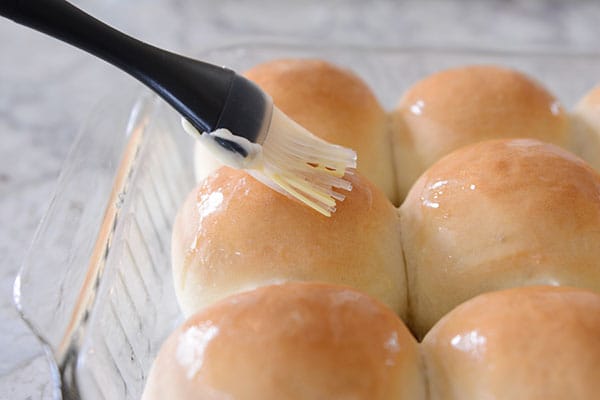
- Silicone pastry brush for brushing the rolls with butter after baking.
- My go-to OXO bench knife for portioning out the dough.
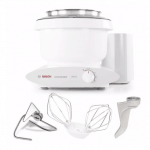
A quick note about mixers: I use a Bosch Universal stand mixer for all my bread making. Here is an older but helpful side-by-side (unsponsored) review I did between a Bosch stand mixer and a KitchenAid stand mixer.
French Bread Rolls
Ingredients
- 1 ½ cups warm water (105 to 110 degrees F)
- 1 tablespoon instant or active dry yeast (see note)
- 2 tablespoons granulated sugar or honey
- 2 tablespoons canola oil, vegetable oil, or olive oil
- 1 teaspoon table salt
- 3 ½ to 4 cups (497 to 569 g) all-purpose or bread flour, more or less (see note)
Instructions
- In the bowl of a stand mixer fitted with the dough hook or in a large bowl by hand, combine the warm water, instant yeast, sugar, oil, salt and 2 cups of the flour.
- Begin mixing, and continue to add remaining flour gradually until the dough has pulled away from the sides of the bowl.
- Knead the dough for 4 to 5 minutes in a stand mixer (7 to 9 minutes by hand). Add additionally flour a tablespoon or two at a time only if the dough starts to cling to the sides of the bowl and is really sticky to the touch (see note below for clarification).
- Place the dough in a lightly greased bowl and cover. Let the dough rise until doubled, 1 to 2 hours.
- Turn the dough out onto a lightly greased countertop.
- Divide the dough into 12 equal pieces (about 2.75 ounces each, more or less), and form the dough into round balls by cupping your hand around the dough and spinning into a round shape, pinching the bottom to seal any rough edges, if needed (video tutorial here right at minute marker 2:20).
- Place the rolls in a lightly greased 9X13-inch pan or on a lightly greased half sheet pan. Space the rolls about 1/2 to 1-inch apart.
- Cover the rolls loosely with a lightweight towel or greased plastic wrap and let the rolls rise until very puffy and nearly doubled, about 45 minutes to 1 hour.
- While the rolls rise, preheat the oven to 400 degrees F (if your oven bakes hot, preheat to 375 degrees F.) Bake for 17 to 20 minutes until golden and baked through.
- Immediately out of the oven, brush with butter, if desired. Serve warm or at room temperature.
Notes
Recommended Products
Recipe Source: Mel’s Kitchen Cafe
Recipe originally published 12/2007; updated with new pictures, step-by-step tutorial, and recipe notes.

I’ve made Mel’s easy French bread so many times, I’ve made it at my winter place in MX and always get raves over it. Today I tried the French rolls using 60/40 white to WW flour (Canadian), they look spectacular coming out of the oven. Thank you so much for this recipe! I’ll try the 100% WW rolls once I find the wheat gluten
This is the best recipe ever! So easy and they turned out AMAZING. I will be making these every week! I just got my KitchenAid mixer and have been trying to find my go-to bread roll recipe–this is IT~
I just started baking my own bread and have tried a couple different recipes – hands down this is my family’s favorite! My kids always ask me to make more.
I’m so happy to hear that, Kate – way to go!
Very easy to make,,and ,delicious !
What a great recipe! I made one batch, made 6 rolls, then used the other half of the dough and made cinnamon rolls with it. Oh man were they good!!
Wow these rolls are awesome thankyou so much and so easy thanks from Australia
This is our go to recipe for our family. My kids love these buns!
Can you make this in a bread machine
I haven’t tried that, but I believe others have with good success.
Absolutely! I have another batch rising in my Zojirushi bread maker. right now. Can’t keep them long around here 🙂
These are such wonderful rolls!
Made sub rolls. So far my go to now
These are lovely though a little too sweet for my taste. Have you tried making them with less sugar or would this affect the rise? Thanks for the recipe!
Yes, you can cut the sugar down if you’d like.
Easy recipe for beginners. I’m usually an anxious baker but these came out brilliant on the first try. So soft and fluffy. I just added a lil coarse salt and sesame seeds on top. Greetings from South Africa!
So happy to hear that, Saira! Thanks for letting me know!
Hi! I’m curious of if I could cut out the sugar/honey from the recipe and it would still be okay? I know sugar is used often just to help the yeast activate, but would it also change the flavour?
Hi Rex, eliminating the sugar or honey will change the flavor a bit, but you can definitely experiment leaving it out.
They are so quick and easy, I was amazed at how delicious they are. These are my go to rolls..
Very happy to hear that!
I love these rolls! I make them every weekend and freeze them to use throughout the week. I prefer a slightly more flavorful roll so I uped the sugar and oil to 4 Tbsp and the salt to 1 1/2 tsp. They come out great every time!
Thanks for the comment – glad you love these!
I originally made these rolls because my Grandson has a severe dairy allergy and they are dairy free. I continue to make them because they are so good that everyone requests I make them.
They tasted great. Sister made them, told me what they were and the simple ingredients list. Once you add oil or sugar to this you change it from a lean dough to an enriched dough. It’s still very yummy, just lacks an accurate title.
My entire family (sisters, mom, aunts, brothers, etc) love to use this recipe and it has become a staple in my own household!
But I wanna know.. can you freeze the dough similar to a Rhodes Rolls type of thing? This would make my life even easier !
Yes, it works great! Freeze the dough balls on a baking pan BEFORE they rise and then transfer the frozen dough balls to a freezer bag.
INCREDIBLE! I bake a lot—breads, buns, sourdough, pizza dough—and I’m always on the lookout for a great new recipe. I made five batches of these for a party I’m hosting tomorrow, hoping they’d be good (they are!) to serve with pulled pork. Honestly, I’m not sure there will be any left for the party because my family keeps sneaking them! They’re absolutely delicious and some of the easiest buns I’ve ever made.